Between the Shoes: What Really Happens When a Baji Live Table Hits Pause

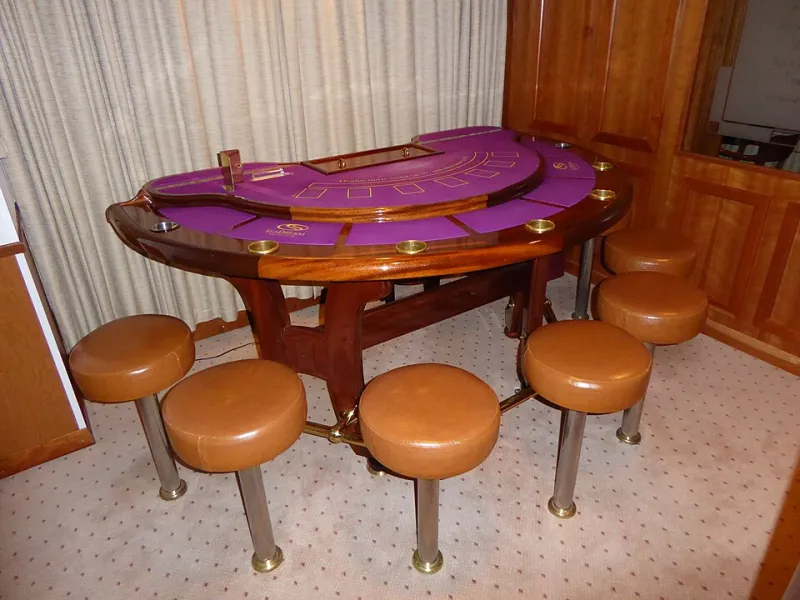
Photo: Mark Hillary, CC BY 2.0, via Wikimedia Commons
If you've logged more than a few hours at Baji's live tables, you've seen it: the dealer finishes a shoe, the screen flashes something about a shuffle or a short break, and the game just... stops. No cards, no chips, no action. For a player used to the 24/7 grind of an RNG slot, that pause can feel like the casino went dark on purpose.
It didn't. That gap is one of the most human parts of the whole operation — and almost nobody in the affiliate world talks about it. So let's pull back the curtain a little.
The Studio Never Sleeps, But the Dealer Does
Baji's live studios run around the clock because players log in from every timezone on the planet. When it's lunchtime in Philadelphia, it's the middle of the night in Manila. That means dealer shifts are staggered, not synchronized — a table you play at 2 PM Eastern might switch dealers at 3 PM Eastern, then again at 7.
Shift changes at a live table look a lot like shift changes anywhere else. The outgoing dealer finishes the current shoe or round, hands over the table, and walks off. The replacement sits down, adjusts the chair, checks the equipment, and picks up the game without skipping a beat. Sometimes you'll get a quick greeting. Sometimes the transition is so smooth you barely notice.
The point is: that person on screen isn't a machine running a 12-hour marathon. They're working a shift, same as a bartender or a barista, with scheduled breaks written into their day.
What a Break Actually Looks Like
Dealer breaks are short — usually a few minutes — and they're staggered across the studio floor so tables stay covered. During those windows, a few things happen:
- The table gets serviced. Cards get swapped, equipment gets checked, and the pit side of the operation does its housekeeping.
- The dealer resets. Water, a stretch, a moment away from the lens. Dealing live is more physically demanding than it looks — the repetitive shuffling and card handling adds up over a shift.
- The camera keeps rolling. Here's the part that surprises new players: the stream often stays live during a pause. You might see an empty seat, a supervisor walking through the frame, or the next dealer prepping the shoe. Nothing scandalous — just a workplace doing its thing.
Some studios fill the gap with a countdown timer or an automated message. Others just let the room breathe. Either way, the pause is built into the schedule, not improvised.
The Rhythm You Learn to Read
Here's where a little insider knowledge pays off for US players. Once you understand that pauses follow a rhythm — end of shoe, top of the hour, dealer rotation — you stop treating them as interruptions and start treating them as information.
A shuffle break after a long shoe? Normal. A dealer swap at a consistent time each hour? That's the shift schedule. A table going quiet for an extended stretch at 4 AM your time? You've probably wandered into a low-traffic window where the studio consolidates tables.
Knowing the rhythm helps in a couple of practical ways. If you're planning a session around a specific dealer or table, the hourly rotation tells you when the seat will change. If you hate dead air, you can time your sessions to avoid the top-of-hour shuffle windows. And if you're mid-session when a break hits, it's a natural checkpoint to assess your bankroll — the same discipline we've preached in our bankroll guides all along.
Why It Matters That They're People
There's a temptation, playing through a screen, to forget there's a human on the other end of that lens. The dealer doesn't control the cards. They can't see your chat message the instant you send it. They're working a job with breaks, rotations, and supervisors, doing the same routine hundreds of times a shift with a smile.
That's also why the etiquette matters online as much as it does at a table in Vegas. The dealer who deals your shoe at 11 PM Eastern has likely already dealt to players in three other countries tonight. A little patience during a shuffle break, a realistic expectation about chat response times — it all comes from remembering the studio is a workplace, not a vending machine.
The Takeaway
The pause between shoes isn't dead time. It's the visible seam of a 24-hour operation that runs on human schedules. Learn the rhythm and you'll read the studio floor like a regular — and you'll never again wonder why the table went quiet right when your streak was heating up.
The cards don't care about your streak anyway. But at least now you know why the dealer stepped away.